Central Komodo
Batu Bolong
A rock islet in central Komodo with a coral shelf at five metres, a wall on the exposed side, and fish everywhere in between.
- Depth
- 5–35 m
- Difficulty
- Moderate
- Current
- Strong
- Diving season
- April to November
- Marine life
- Green turtle, Whitetip reef shark, Giant trevally, Napoleon wrasse, Fusilier
The channel above the site
Scroll sideways
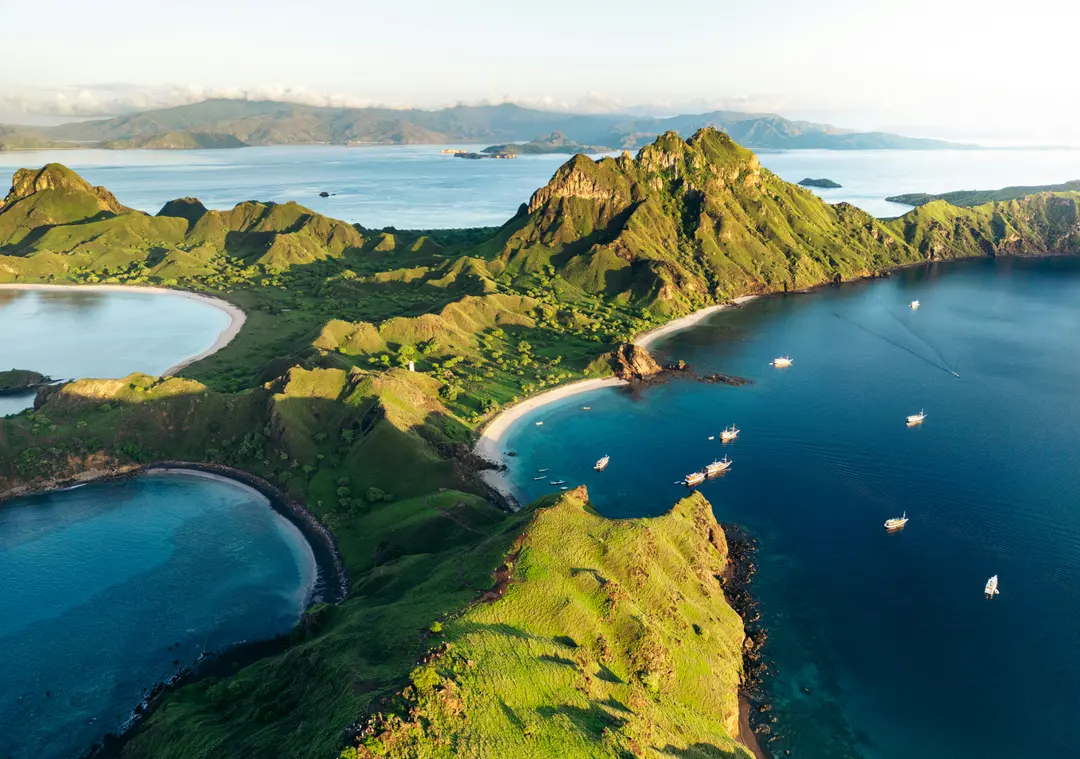
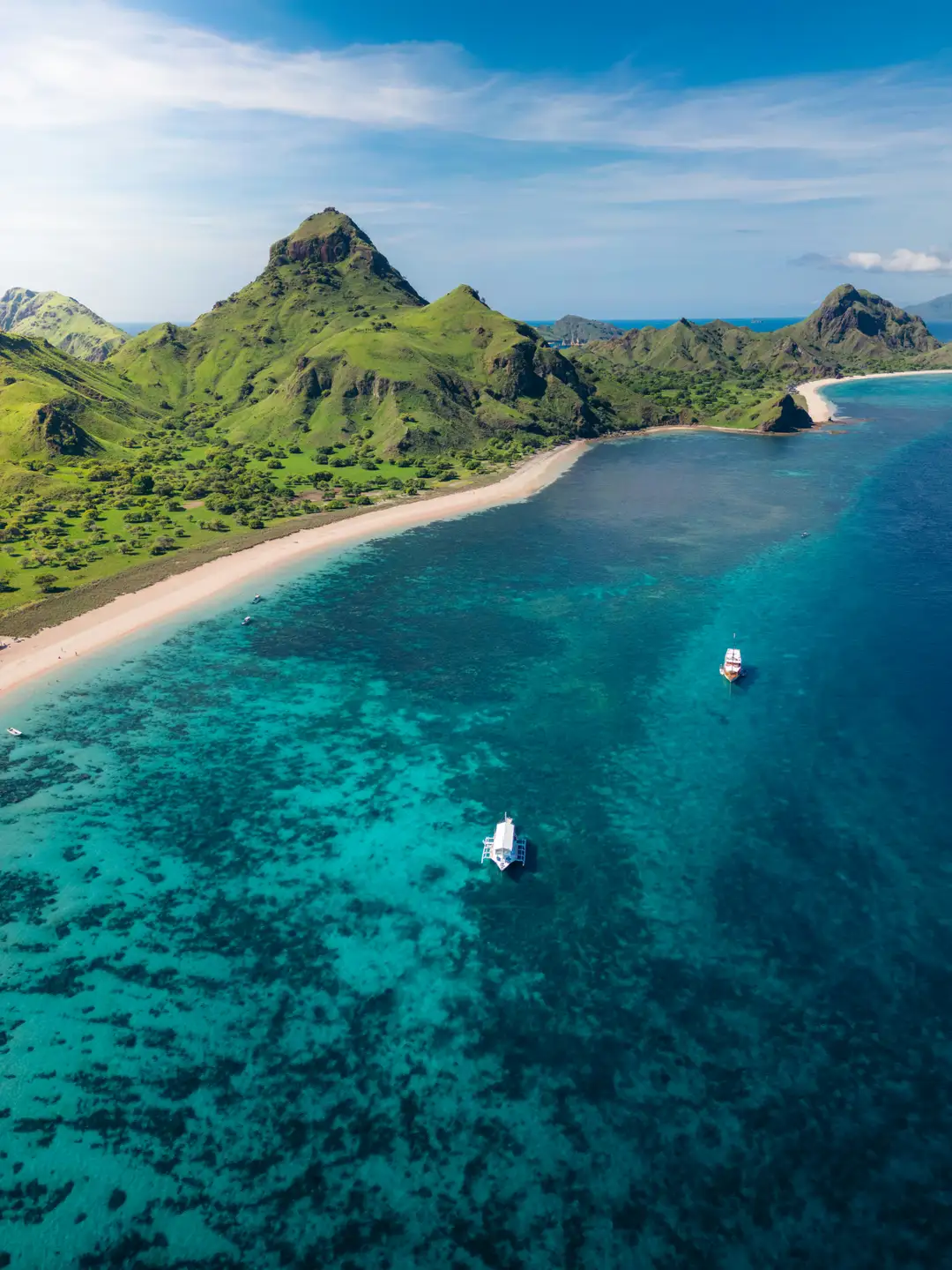
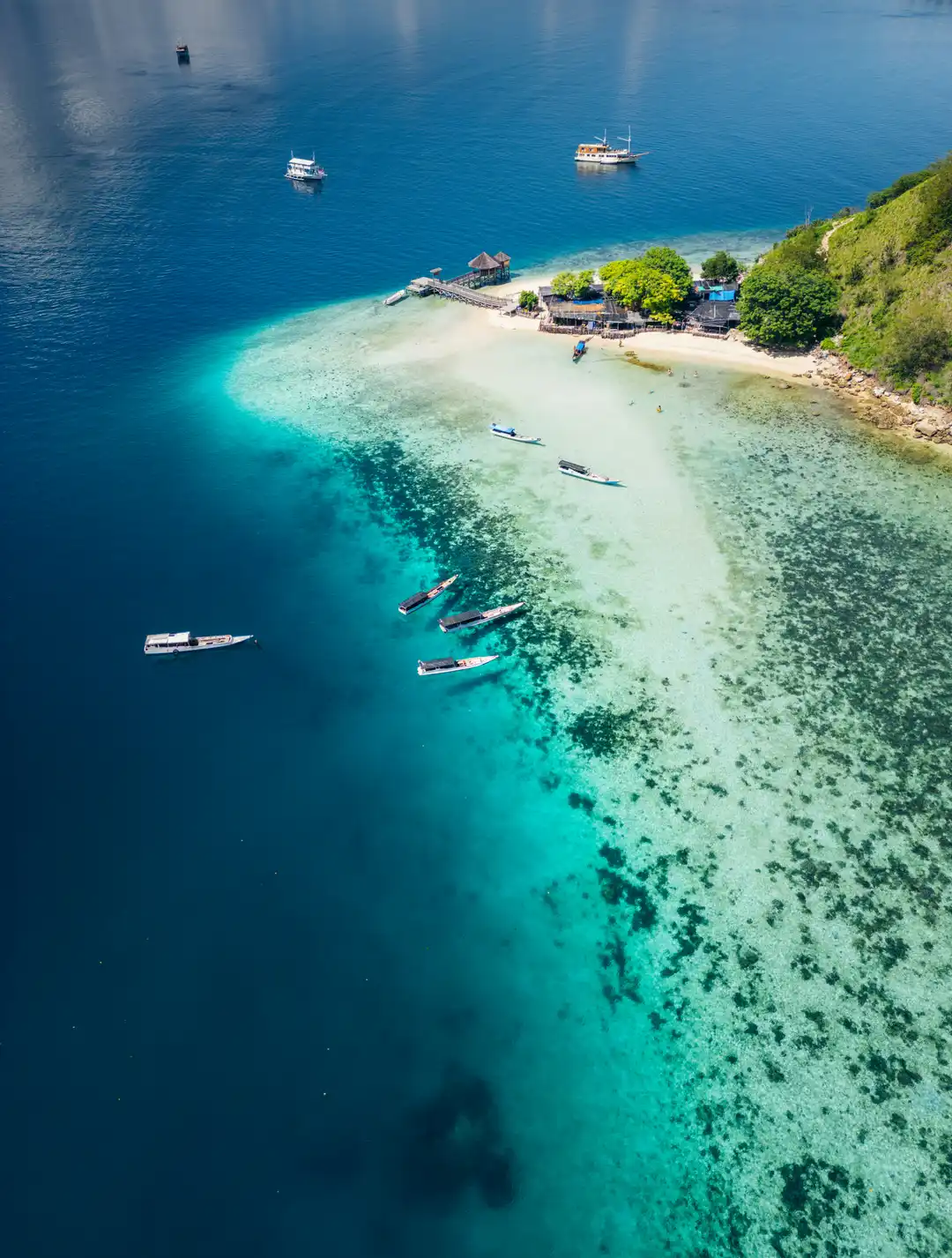
The site is underwater; these are the islands and shallows at the surface. There is no underwater photography in this set, so we do not pretend otherwise.
Batu Bolong is a rock that breaks the surface, which makes it easy to read from the boat: you can see where the current is splitting before you get wet. That split is the whole dive.
The shape of the site
One face is a shallow shelf, coral from about five metres down to twelve, lit and busy. The other side is a wall that drops past thirty and turns into blue. Between them the rock is narrow enough to swim around in a single dive if the tide is slack, and too wide to fight if it is not.
On the shelf there are green turtles in the coral, whitetips parked under the ledges, and napoleon wrasse working the edge. Fusiliers hang in a curtain off the point and move as one animal when a trevally comes through.
Diving it
The site works on slack water or as a drift. On a running tide the lee face is calm and the outside is fast; the crew drops divers on the slack side and picks them up down-current, so the plan is a drift with a live boat rather than a fixed line.
The shelf is shallow enough to finish a dive on, which is useful: the last ten minutes at five metres are usually the best ones, with the turtles still out and the light coming through the coral.
When to go
April to November is the reliable window, in the dry season, when the surface is flat more often than not. The site is divable outside that, but the wind and the rain make the boat ride less pleasant and the water greener.
Trips that dive this site
What the crew checks before this site
Do I need to be certified to join a trip?
Divers need at least an Open Water certification for most sites, and Advanced for the central channel when the current is running. Non-divers can join as snorkellers on the same boat.